
What to Do If You’re Going Through Probate in California: A Step-by-Step Guide

Losing a loved one is never easy. Sometimes, families find themselves having to deal with a legal process called probate, even if they did not expect it.
If you’ve recently been told that you need to go through probate, you may be wondering:
Where do I start? What do I need to do?
The process can feel overwhelming, but understanding the steps can help you move forward with more clarity and confidence.
In this guide, we will walk you through:
• what probate is
• why it may be required
• the steps involved in the probate process
• what your responsibilities may be
• how to get help along the way
What Is Probate?
Probate is the legal process used to transfer assets after someone passes away.
This process is supervised by the court to ensure that:
• debts are addressed
• taxes are handled
• assets are distributed correctly
In Orange County, probate cases are handled through the Orange County Superior Court Probate Division.
If assets are held in a person’s name alone, they typically cannot be accessed or transferred until probate begins.
Why You May Need to Go Through Probate
Many families are surprised when banks or institutions tell them that accounts are frozen.
This usually happens because:
• assets are titled in the individual’s name alone
• no trust is in place
• no beneficiary is listed
In these situations, probate is often required to legally transfer ownership.
Step-by-Step: The Probate Process in California
While every case is different, most probate cases follow a similar process.
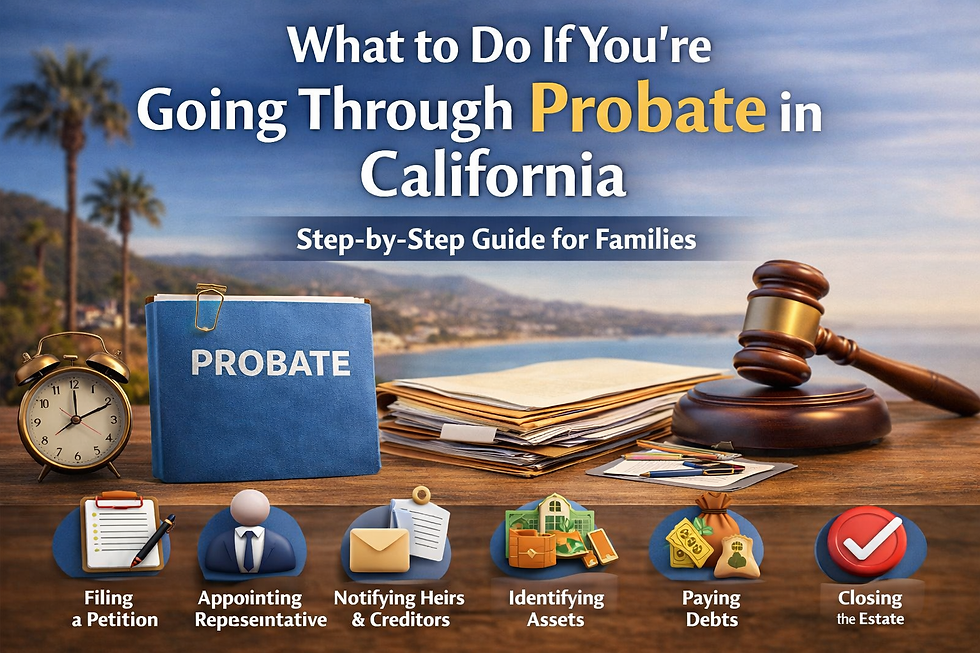
1. Filing a Petition with the Court
The first step is filing a petition to open the probate case.
This asks the court to:
• recognize the will (if there is one)
• appoint a personal representative
2. Appointment of a Personal Representative
The court appoints someone to manage the estate.
This person may be:
• an executor (named in a will)
• an administrator (if there is no will)
This role comes with important legal responsibilities.
3. Notifying Heirs and Creditors
Notice must be provided to:
• family members
• beneficiaries
• potential creditors
This ensures transparency throughout the process.
4. Identifying and Valuing Assets
The estate must be reviewed to identify all assets, which may include:
• bank accounts
• real estate
• personal property
An inventory and appraisal is usually required.
5. Address Debts and Expenses
Before assets can be distributed, the estate must address:
• debts
• taxes
• administrative costs
6. Distributing Assets
Once obligations are resolved, the remaining assets are distributed to beneficiaries or heirs.
7. Closing the Estate
After all steps are completed, the court reviews the case and allows the estate to be closed.
What Are Your Responsibilities?
If you’ve been appointed as a personal representative, you are responsible for:
• managing estate assets
• filing court documents
• meeting deadlines
• communicating with beneficiaries
• ensuring proper distribution
These responsibilities can feel overwhelming, especially during a difficult time.
You Don’t Have to Go Through Probate Alone
When probate comes up, many families are left trying to figure out what to do next.
Working with a probate attorney can help:
• ensure documents are filed correctly
• avoid delays or mistakes
• guide you through each step of the process
• provide clarity during a difficult time
Final Thoughts
If you’ve recently been told that you need to go through probate, you are not alone.
While the process may seem complicated, understanding the steps can help you move forward with confidence.
Having the right guidance can make a meaningful difference for both you and your family.


Comments